
Furnace Turns On Then Shuts Off: What Could Be Wrong?
A furnace that turns on then shuts off does not automatically need replacement.
If your furnace starts making noise but shuts off before your home gets warm, you may be experiencing short cycling. Possible causes include a dirty air filter, faulty flame sensor, ignition problem, thermostat malfunction, or a safety control interrupting operation. At NexPro HVAC & Plumbing, our approach is straightforward: repair first, replace only when it makes sense.
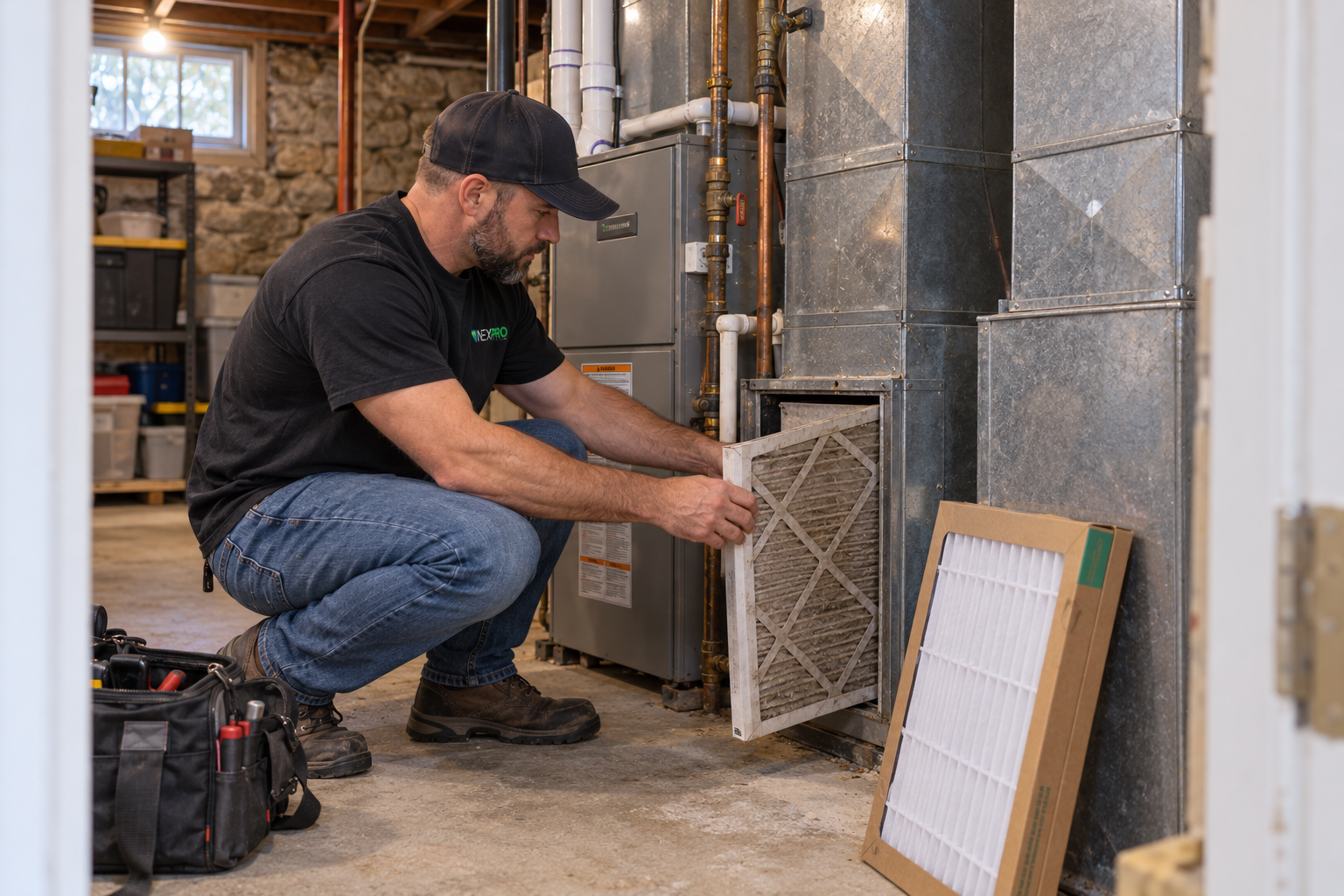
Your thermostat calls for heat. The furnace starts making noise, and for a moment, everything seems normal. Then, just a few seconds or minutes later, the system shuts off. You wait, hoping the heat will return. The furnace starts again, only to stop before your home gets warm.
If your furnace turns on then shuts off, you may be experiencing a heating problem known as short cycling. However, not every early shutdown has the same cause, and understanding exactly when the furnace stops can help identify what needs attention.
For homeowners in Newton, MA, and surrounding Massachusetts communities, this guide explains why a gas furnace may repeatedly start and stop, what different symptoms can mean, and when professional heating repair is necessary. At NexPro HVAC & Plumbing, our approach is straightforward: repair first, replace only when it makes sense.
Quick Answer: Why Does My Furnace Turn On Then Shut Off?
A furnace that turns on then shuts off may have a dirty air filter, faulty flame sensor, ignition problem, thermostat malfunction, restricted airflow, or a safety control interrupting operation. A furnace that stops within a few seconds may be experiencing an ignition or flame-detection problem, while a system that runs for several minutes before shutting down could be overheating or responding to incorrect thermostat readings.
The shutdown pattern provides useful clues, but the exact cause requires proper diagnosis. Some interruptions are protective responses that help prevent unsafe operation. Others indicate a component that is no longer functioning correctly.
What Is Furnace Short Cycling?
Furnace short cycling happens when a heating system repeatedly starts and stops before completing an appropriate heating cycle. Under normal conditions, your thermostat requests heat, the furnace produces warm air, and the system continues operating until the thermostat's demand is satisfied. Once the desired temperature is reached, the burners shut off. The blower may continue running briefly to distribute remaining heat. That's normal operation.
Short cycling is different.
A short-cycling furnace may:
- Turn on and shut down after only a few seconds.
- Run for several minutes before unexpectedly stopping.
- Restart repeatedly without adequately heating the house.
- Produce heat inconsistently.
- Enter a safety lockout after unsuccessful startup attempts.
There is no single heating-cycle duration that applies to every furnace. Equipment design, outdoor temperature, heating demand, and thermostat controls all affect normal cycle length. The more important warning sign is repeated shutdown before the home reaches its requested temperature.
Why Is Short Cycling a Problem?
Frequent, unnecessary startup and shutdown cycles can:
- Reduce heating efficiency.
- Increase wear on mechanical and electrical components.
- Create uneven indoor temperatures.
- Prevent the furnace from keeping up with heating demand.
- Contribute to higher energy consumption.
- Indicate an unresolved safety or equipment problem.
If your furnace frequently shuts down before heating the house, it is worth investigating rather than allowing the pattern to continue.
Furnace Shuts Off After a Few Seconds vs. a Few Minutes
One of the most useful details when diagnosing a furnace problem is how long it operates before shutting off.
| What happens | Possible cause | What it may indicate |
|---|---|---|
| Furnace starts but burners never ignite | Ignitor, gas supply, or ignition control problem | Heating sequence cannot complete |
| Burners ignite, then shut off within seconds | Flame sensor or flame-detection issue | Control system may not confirm a stable flame |
| Furnace heats for several minutes, then stops | Airflow restriction or overheating | High-limit safety protection may be activating |
| Furnace repeatedly stops before reaching the set temperature | Thermostat, airflow, or control problem | Heating cycles may be interrupted |
| Furnace shuts down and displays an error | Safety lockout or equipment malfunction | Diagnostic testing may be necessary |
| Furnace stops when the thermostat reaches its setting | Normal operation | No malfunction necessarily exists |
These patterns can help a technician narrow down the investigation, but they are not definitive diagnoses.
Common Causes of a Furnace That Keeps Shutting Off
Different problems can produce similar symptoms. These examples explain why diagnosis matters before a whole-system replacement.
1. Dirty Air Filter Causing the Furnace to Overheat
A clogged air filter is one possible cause of furnace short cycling. Your furnace needs adequate airflow to transfer heat into your home's ductwork. When the air filter becomes excessively dirty, less air can move through the system. This may cause the furnace's internal temperature to rise above the acceptable operating range. A high-limit safety control can then shut off the burners. The blower may continue operating while the equipment cools. Once conditions change, the system may attempt another heating cycle, repeating the problem. Inspect the accessible furnace filter and replace it if needed, following the manufacturer's instructions. If the furnace continues short cycling after the filter is replaced, another airflow or equipment issue may be present.
2. Dirty or Faulty Flame Sensor
A flame sensor helps the furnace verify that its burners have successfully ignited. If the control system cannot confirm the presence of a flame, it may shut off the gas supply as a safety precaution. This is one possible explanation when a furnace ignites briefly but the flames disappear after only a few seconds. The problem may involve contamination on the sensor, electrical connections, grounding, or another part of the flame-detection system. In some cases, professional cleaning or replacement of a flame sensor can resolve the problem. However, ignition and flame detection are safety-related functions — a qualified technician should confirm the cause instead of replacing parts based only on symptoms.
3. Furnace Ignition System Problems
A gas furnace must complete a controlled ignition sequence before it can produce heat. If ignition does not occur as expected, the furnace may interrupt the startup sequence. Depending on the system, the furnace may attempt ignition again or stop operating until a fault is addressed. Potential problems include a failed electronic ignitor, ignition control malfunction, electrical connection problems, gas valve malfunction, interruption in the gas supply, or other combustion-related faults. You may hear the furnace attempting to start without warm air ever reaching the vents. A technician can evaluate the ignition sequence and determine which component is preventing normal operation. Never attempt to bypass ignition controls or manually force the furnace burners to ignite.
4. Thermostat Problems Causing Repeated Shutdowns
Your thermostat determines when the heating system should start and stop. If it sends incorrect signals, reads indoor temperatures inaccurately, or has an electrical problem, the furnace may operate inconsistently. For example, a thermostat located near a heat source may register a higher temperature than the rest of the home, causing the system to stop heating before other rooms are comfortable. Make sure the thermostat is in HEAT mode and the selected temperature is above the actual room temperature. Check whether the display is functioning normally and replace batteries if applicable. If the furnace continues turning on and off unexpectedly, a professional can test the thermostat and its communication with the heating system.
5. Restricted Airflow or Blower Problems
Even with a clean air filter, a furnace can experience inadequate airflow. Other possible causes include blocked return grilles, excessive restrictions in the ductwork, or a blower that is not operating correctly. The blower moves air across the furnace's heat exchanger and distributes it throughout the home. Without sufficient airflow, internal furnace temperatures may rise and trigger a safety shutdown. If there is an airflow problem, the technician may need to measure airflow conditions, evaluate the blower, and determine whether the system is operating within its designed temperature range. Replacing a safety switch without correcting restricted airflow may not resolve the actual cause.
6. Blocked Exhaust Vent or Pressure Switch Problems
Many modern high-efficiency gas furnaces use a combustion-air and exhaust-venting system with safety controls. A pressure switch helps verify conditions required for safe furnace operation. If the furnace cannot establish or maintain those conditions, the control system may prevent ignition or interrupt heating. Possible contributing conditions include blocked exhaust piping, restricted combustion-air intake, condensate drainage issues, inducer motor problems, faulty pressure-sensing components, or related wiring or control faults. During Massachusetts winters, snow and ice accumulation may also affect exterior vent terminations. Improper venting can create combustion safety and carbon monoxide hazards — never bypass a pressure switch or operate a furnace with suspected venting problems.
7. Furnace Control Board or Electrical Problems
Your furnace relies on electronic controls to coordinate ignition, blower operation, temperature limits, and other safety functions. A problem in the electrical system may interrupt this sequence. Potential causes include a defective control board, poor connections, intermittent power, or malfunctioning electrical components. Some issues may cause the system to restart unexpectedly, while others may prevent the furnace from completing a heating cycle. Because these symptoms can overlap with other failures, electrical testing is necessary before determining whether a control component needs replacement.
8. An Oversized Furnace Can Cause Frequent Heating Cycles
Not every short-cycling problem is caused by a broken component. In some homes, the furnace may have been installed with more heating capacity than the building requires. An oversized furnace may raise the temperature near the thermostat too quickly, causing the system to shut down before heat is evenly distributed. The home may then cool enough to trigger another cycle shortly afterward. A furnace that is too large should not be diagnosed from cycle length alone. A qualified HVAC contractor can evaluate the home's heating load, equipment capacity, controls, and ductwork before recommending a solution.
Why Does My Furnace Shut Off Before Reaching the Thermostat Temperature?
If the thermostat is set to 70°F but your furnace shuts off while the home is still at 64°F, something may be interrupting the heating process. A few possible explanations include:
Overheating
Restricted airflow causes a temperature safety control to stop burner operation.
Ignition problems
The furnace fails to establish or maintain a stable flame.
Thermostat malfunction
The heating demand is interrupted by incorrect signals or temperature readings.
Venting or safety-control problems
The system cannot maintain conditions required for continued burner operation.
Electrical failure
The furnace loses a required control signal or encounters a component fault.
If the furnace consistently stops before satisfying the thermostat, that behavior is a stronger reason for professional evaluation than a single short heating cycle.
What Should You Check Before Calling a Furnace Technician?
If there is no gas odor, carbon monoxide alarm, or other indication of danger, there are a few basic checks homeowners can perform.
Safe Furnace Troubleshooting Checklist
- 1Confirm the thermostat settings. Make sure the system is set to HEAT and the temperature is above the current room temperature.
- 2Inspect the air filter. Replace a dirty filter according to the manufacturer's instructions.
- 3Check supply and return vents. Confirm that furniture or other objects are not blocking airflow.
- 4Observe the shutdown timing. Note whether the system stops after seconds or several minutes.
- 5Record visible fault codes. If your thermostat or furnace has an accessible error display, note the code without removing electrical or combustion panels.
- 6Listen for unusual sounds. Record when unusual noises occur, but do not attempt to access moving or electrical components.
- 7Check whether the thermostat reaches its set temperature. This helps distinguish normal heating cycles from interrupted operation.
If the furnace continues repeatedly starting and shutting down after these checks, turn it off using the normal thermostat control and arrange professional service. Avoid repeatedly resetting the equipment to force it to operate.
Important Gas Furnace Safety Warning
If you smell natural gas or suspect a gas leak, evacuate immediately and call 911 from outside the building. Do not use electrical switches, operate the thermostat, open or close windows, or attempt to shut off the gas. If a carbon monoxide alarm sounds or you suspect carbon monoxide exposure, leave the home, call 911, and seek medical attention if symptoms occur. Never bypass furnace safety controls or attempt to defeat an ignition lockout.
Is Furnace Short Cycling Dangerous?
Short cycling does not automatically mean the furnace is creating an immediate emergency. For example, a thermostat problem may simply be interrupting the heating cycle. However, repeated shutdowns can also indicate that a protective control is responding to overheating, ignition failure, or an unsafe operating condition.
Continuing to operate the furnace without investigating the cause may increase wear, reduce heating reliability, or allow an existing problem to worsen. Because different causes require different repairs, identifying the reason for the shutdown is essential.
How Much Does It Cost to Repair a Furnace That Keeps Shutting Off?
The cost of repairing a furnace that repeatedly shuts down depends on the actual problem. A dirty filter or thermostat issue may require relatively straightforward attention. Problems involving ignition controls, blower components, venting, or electrical systems may involve more diagnostic work and replacement parts.
The final cost can depend on:
- The component causing the shutdown
- The furnace make and model
- Availability of replacement parts
- Labor and diagnostic requirements
- Accessibility of the equipment
- Whether multiple related problems exist
- The overall condition of the heating system
A professional diagnosis allows homeowners to understand the specific repair needed before making a major financial decision.
Does Short Cycling Mean You Need a New Furnace?
No. A furnace that keeps turning on and shutting off does not automatically need replacement. Some causes involve individual components or maintenance-related conditions that can be corrected. However, significant equipment deterioration, unsafe combustion conditions, unavailable parts, or repeated expensive failures may make replacement worth considering. At NexPro HVAC & Plumbing, the focus is on understanding the problem and considering appropriate repair solutions before recommending a full system replacement.
How a Professional HVAC Technician Diagnoses Furnace Short Cycling
A technician does more than observe whether the furnace turns on. The diagnostic process may include evaluating the complete heating sequence to determine exactly where operation is being interrupted. Depending on the equipment and symptoms, this may include:
Thermostat and heating demand
Checking whether the thermostat consistently requests heat and communicates correctly with the furnace.
Ignition sequence
Examining whether the furnace progresses through the required startup stages.
Flame detection
Testing the system's ability to establish and verify burner flame.
Airflow and operating temperature
Measuring temperature rise and evaluating whether sufficient air moves through the system.
Safety controls
Determining whether a high-limit control, pressure switch, or another protection device is interrupting operation.
Electrical components
Checking relevant wiring, control signals, and component performance.
Venting and combustion
Evaluating whether the furnace is operating under safe combustion and exhaust conditions.
The objective is to distinguish between the component that stopped the furnace and the underlying condition that caused the interruption. For example, an overheating limit switch may be shutting off the burners because the airflow is restricted. In that situation, repairing the actual airflow problem is more important than simply replacing the switch.
Furnace Repair in Newton, MA: Why Early Diagnosis Matters
A reliable heating system is particularly important during cold Massachusetts winters. In Newton and surrounding communities, a furnace that repeatedly starts and stops may struggle to maintain a comfortable indoor temperature as outdoor temperatures fall.
Heating equipment can also vary considerably between homes. Some properties have older forced-air systems, others use newer high-efficiency furnaces, and many Massachusetts homes rely on boilers or other heating technologies. Identifying the type of heating system is important because the cause of frequent cycling can differ between equipment types.
NexPro HVAC & Plumbing focuses on professional HVAC diagnostics and appropriate repair solutions. Rather than assuming that every heating issue requires new equipment, the goal is to understand what is happening and identify practical next steps.
Furnace Keeps Shutting Off? Schedule a Diagnostic.
If your gas furnace starts and stops repeatedly, don't rely on guesswork or continue resetting it. Contact NexPro HVAC & Plumbing to request an evaluation of the heating problem.
How Can You Help Prevent Furnace Short Cycling?
Although not every equipment failure can be prevented, routine heating maintenance can reduce certain conditions that contribute to short cycling.
Keep the air filter clean
Inspect and replace filters according to the manufacturer's recommendations and household conditions.
Maintain adequate airflow
Keep return grilles and supply vents unobstructed.
Check thermostat operation
Confirm that your thermostat is configured correctly and is reading indoor temperatures reliably.
Pay attention to operating patterns
If the furnace begins cycling more frequently, making unusual noises, or struggling to maintain temperature, request an evaluation.
Schedule professional heating maintenance
Professional maintenance can help identify airflow issues, deteriorating components, and operating conditions that may require attention.
A maintenance visit cannot guarantee that every future breakdown will be prevented, but it can help support safer and more reliable operation.
Frequently Asked Questions About Furnaces Turning On and Shutting Off
Why does my furnace turn on and then shut off after a few seconds?
If the burners ignite and then shut off within seconds, the problem may involve the flame sensor or another part of the ignition and flame-detection system. A technician should inspect the heating sequence to identify the actual cause.
Why does my furnace run for five minutes and then shut off?
A furnace that repeatedly stops after several minutes may be overheating because of restricted airflow. Thermostat problems, control faults, or other issues are also possible. The timing alone cannot confirm the cause.
What does it mean when a furnace won't stay on?
It means the furnace is unable to complete the expected heating operation. Possible causes include ignition failures, airflow restrictions, overheating, thermostat problems, and protective safety shutdowns.
Can a dirty furnace filter cause short cycling?
Yes. A clogged filter can restrict airflow and cause a furnace to overheat. The high-limit safety control may shut off the burners, resulting in interrupted heating cycles.
Can a bad thermostat make a furnace keep turning on and off?
Yes. Incorrect temperature readings, damaged wiring, improper configuration, or faulty thermostat components may cause inconsistent heating signals.
Why does my furnace keep trying to start but never heat the house?
A repeated unsuccessful startup sequence can indicate an ignition problem, flame-detection issue, gas supply interruption, or other control-related fault. Repeated ignition failures require professional evaluation.
Is it normal for a furnace to turn on and off several times an hour?
It can be, depending on the furnace, thermostat configuration, outdoor temperature, and heating demand. Frequent cycles are more concerning when they are unusually short, the house does not reach its set temperature, or the operating pattern has changed significantly.
Should I turn off my furnace if it keeps short cycling?
If the furnace repeatedly starts and stops without heating your home properly, turn it off through the thermostat and contact an HVAC professional. If you smell gas or a carbon monoxide alarm sounds, evacuate immediately and call 911 from outside.
Is it better to repair or replace a short-cycling furnace?
The decision depends on the diagnosed problem, furnace condition, repair cost, equipment safety, and replacement-part availability. Many short-cycling problems can be repaired, but significant damage or unsafe equipment may justify replacement.
Your Furnace Shouldn't Keep Starting and Stopping Without a Reason
If your furnace turns on and then shuts off repeatedly, the important question isn't simply how to make it run again. It's understanding why the heating cycle is being interrupted. A shutdown after a few seconds may have a very different cause from a furnace that runs for several minutes before stopping.
Some problems involve basic maintenance. Others require professional diagnosis of the ignition system, airflow, controls, or safety components. Replacing the entire furnace should not be the first assumption.
At NexPro HVAC & Plumbing, the priority is to diagnose the problem, explain the findings, and consider safe, appropriate repairs whenever possible.
Need Furnace Repair in Newton, MA?
If your furnace won't stay on, is repeatedly short cycling, or shuts down before your home reaches a comfortable temperature, request a professional heating system evaluation.
We Don't Just Replace. We Repair.
Schedule a Furnace Diagnostic Visit in Newton, MA
Get a clearer understanding of your equipment and the options available. Whether you need help with a current problem or want to discuss preventive maintenance, NexPro HVAC & Plumbing is ready to review your service request.