
Gas Furnace Not Heating? Common Causes That May Be Repairable
A gas furnace that isn't producing heat doesn't necessarily need to be replaced.
Many heating problems are related to individual components, airflow restrictions, ignition failures, or electrical issues that may be repairable after a professional diagnosis. At NexPro HVAC & Plumbing, our approach is straightforward: repair first, replace only when it makes sense.
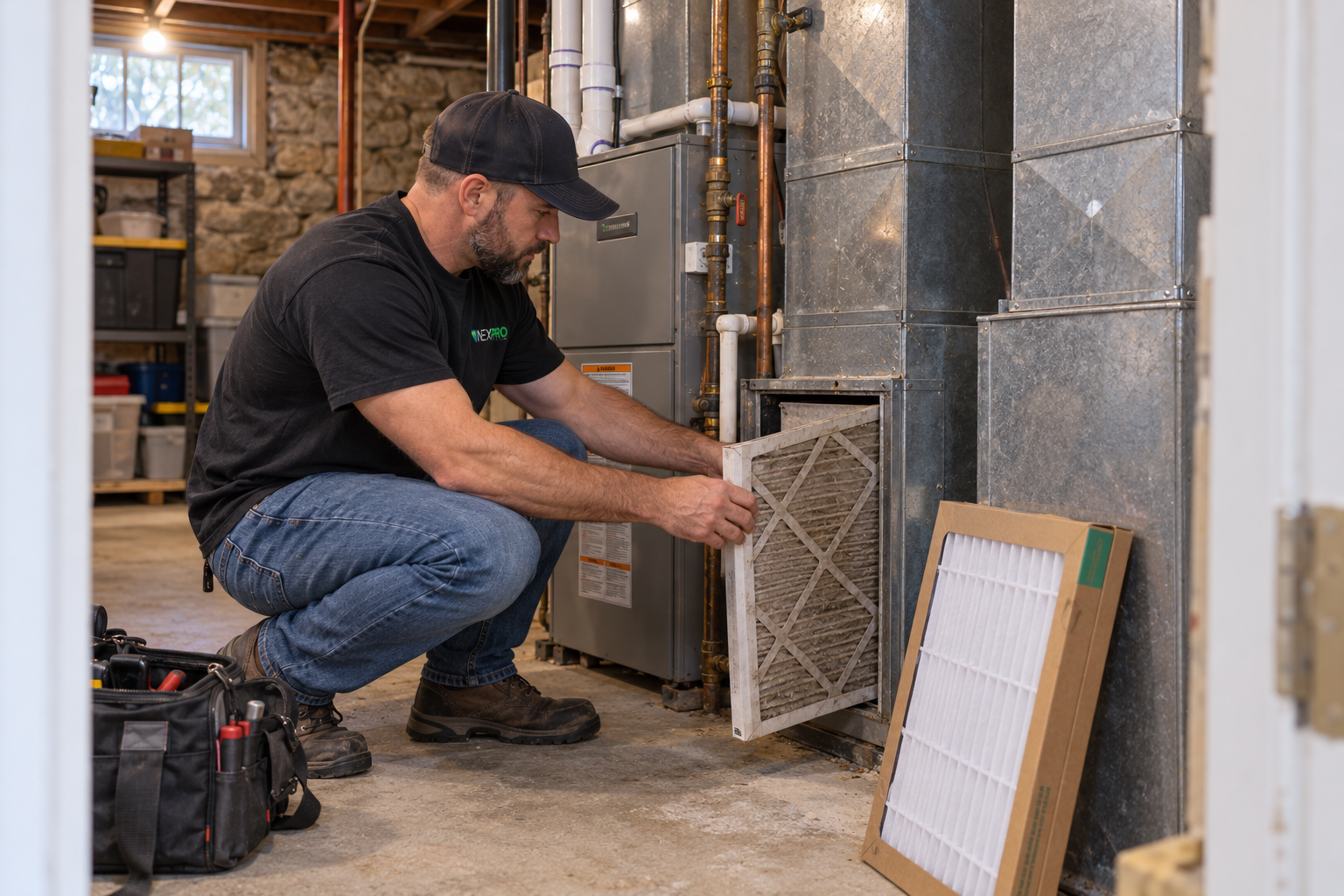
When your gas furnace stops heating your home, it's easy to assume that something major has gone wrong. Maybe the thermostat is set correctly, but the house keeps getting colder. Or perhaps your furnace is running, but only cool air is coming through the vents.
Before you start thinking about replacing your entire heating system, there's something important to understand: a gas furnace that isn't producing heat doesn't necessarily need to be replaced. Many heating problems are related to individual components, airflow restrictions, ignition failures, or electrical issues that may be repairable after a professional diagnosis.
For homeowners in Newton, MA, and surrounding communities, understanding these problems can help you make informed decisions about furnace repair, maintenance, and replacement. At NexPro HVAC & Plumbing, our approach is straightforward: repair first, replace only when it makes sense.
Why Is My Gas Furnace Running but Not Heating?
A gas furnace may run without producing heat because of a dirty air filter, thermostat malfunction, failed ignitor, dirty flame sensor, restricted airflow, or a problem with its safety controls. Some issues have simple solutions, while others require professional HVAC diagnostics.
A gas furnace relies on several systems working together:
- The thermostat requests heat.
- The furnace controls initiate a heating cycle.
- The ignition system lights the burners when safety conditions are satisfied.
- The heat exchanger transfers heat to the air moving through the system.
- The blower distributes heated air through the ductwork.
If one part of this process fails, your furnace may stop heating properly. The good news is that identifying the failed component can sometimes restore heat without replacing the entire system.
Common Causes of a Gas Furnace Not Heating
1. Dirty or Clogged Furnace Air Filter
A clogged air filter is one of the first things to check when a gas furnace is not heating properly. As dust, pet hair, and other particles accumulate, they restrict airflow through the heating system. Insufficient airflow can cause the furnace to overheat and activate a safety limit switch. Depending on the system, the burners may shut down while the blower continues running.
Common signs of a clogged filter:
- Weak airflow from heating vents
- Furnace shutting off before the house reaches the desired temperature
- Longer heating cycles
- Rooms that remain colder than usual
- Increased dust around supply registers
Is it repairable? Usually, yes. Replacing a dirty filter may resolve an airflow-related problem, provided no other component has been damaged. If the furnace continues shutting down after the filter is replaced, professional testing is necessary to identify the underlying issue.
2. Thermostat Problems or Incorrect Settings
Sometimes the problem isn't inside the furnace at all. A thermostat that is incorrectly configured, malfunctioning, or unable to communicate with the heating system can prevent normal operation.
Before requesting service, verify that:
- The thermostat is set to HEAT.
- The selected temperature is higher than the current room temperature.
- The thermostat display is working properly.
- Batteries are replaced if the model uses them.
- The fan setting is on AUTO rather than ON, unless continuous circulation is intentional.
When the fan is set to ON, the blower may continue circulating room-temperature air even when the burners aren't operating.
Is it repairable? In many cases, yes. The solution may involve correcting thermostat settings, addressing an electrical connection, or replacing a faulty thermostat. A technician can determine whether the problem originates from the thermostat or another part of the heating system.
3. Failed Furnace Ignitor
Modern gas furnaces commonly use electronic ignition systems rather than continuously burning pilot lights. The ignitor is responsible for initiating combustion when the furnace receives a call for heat. When an ignitor fails, the furnace may attempt to start without successfully lighting the burners.
Signs of an ignition problem:
- Furnace attempts to start but produces no heat
- Repeated clicking or startup attempts
- Blower operating without warm air
- System entering a safety lockout
- Heating working intermittently
Is it repairable? Often, yes. A failed ignitor may be replaceable without changing the entire furnace. However, ignition problems can have several causes. A qualified technician should inspect the ignition circuit, gas supply, and safety controls before determining which component needs attention.
4. Dirty or Faulty Flame Sensor
The flame sensor is a safety component that helps the furnace confirm that the burners have ignited. If the control system cannot reliably detect a flame, it may shut off the gas supply to prevent unsafe operation. Over time, deposits on the sensor or an electrical fault can interfere with proper flame detection.
What homeowners may notice:
The furnace starts, the burners ignite briefly, and the flames shut off shortly afterward. The system may repeat the process several times before entering a lockout.
Is it repairable? Frequently, yes. Depending on the diagnosis, the flame sensor may need professional cleaning or replacement. Because this component is part of the furnace's safety system, homeowners should not bypass it or attempt to force the burners to operate.
5. Blower Motor or Air Circulation Problems
Your gas furnace can generate heat correctly and still fail to distribute it throughout your home. The blower motor is responsible for moving heated air through the ductwork. If the motor isn't operating correctly, or the airflow is severely restricted, the system may overheat and shut down.
Potential warning signs include:
- Very little air coming from vents
- Unusual humming or grinding sounds
- Furnace overheating or cycling off
- Inconsistent temperatures throughout the house
- Blower starting and stopping unexpectedly
Is it repairable? Depending on the model and condition, a technician may be able to repair or replace the affected motor or related electrical components. A blower problem does not automatically mean the furnace has reached the end of its useful life.
6. Furnace High-Limit Switch Problems
A furnace high-limit switch is designed to protect the system from overheating. When the internal temperature rises beyond an acceptable threshold, the switch can interrupt burner operation. This may happen because of restricted airflow, an improperly operating blower, or another mechanical problem. A high-limit switch may also malfunction, but it is important to identify why the switch activated before deciding to replace it.
Is it repairable? Often, yes, once the underlying cause has been identified. Simply replacing a safety switch without correcting an overheating condition can leave the original problem unresolved. Professional airflow and temperature testing can help determine the appropriate solution.
7. Blocked Venting or Condensate Drain Problems
High-efficiency gas furnaces have additional components that manage combustion exhaust and condensation. When a vent becomes obstructed or a condensate drain is blocked, the furnace may activate a safety control and prevent the burners from operating. This can be especially relevant during Massachusetts winters, when snow and ice may accumulate around outdoor exhaust terminations.
Possible symptoms include:
- Furnace starts but shuts down quickly
- No heat despite a thermostat call
- Water collecting near a high-efficiency furnace
- Repeated ignition lockouts
- Unusual sounds during startup
Is it repairable? In many situations, yes. A professional can inspect venting, condensate drainage, pressure switches, and related components to determine the cause. Never bypass a pressure switch or operate a furnace with suspected exhaust problems. Improper venting can create serious carbon monoxide hazards.
8. Gas Valve or Control Board Failure
A gas furnace depends on electrical controls and a gas valve to regulate when fuel reaches the burners. If either component malfunctions, the furnace may fail to ignite even when the thermostat is requesting heat. A faulty control board may also interfere with the ignition sequence, blower operation, or safety functions.
Is it repairable? Sometimes. A qualified HVAC technician can test the affected components and determine whether individual parts can be replaced safely and economically. Gas valves, combustion controls, and furnace wiring should never be repaired through DIY experimentation.
What Should You Check Before Calling for Furnace Repair?
If your furnace isn't heating, a few basic checks may help you identify a simple problem.
| What to check | What to look for |
|---|---|
| Thermostat | Confirm HEAT mode and correct temperature setting |
| Air filter | Check for excessive dirt or blockage |
| Furnace power | Verify the external power switch is on |
| Circuit breaker | Check whether the furnace circuit has tripped |
| Air vents | Make sure supply and return vents aren't blocked |
| Error display | Record visible fault codes without opening electrical compartments |
These checks are appropriate only when there are no signs of a gas leak, carbon monoxide problem, or other immediate hazard. If a breaker repeatedly trips, the furnace repeatedly locks out, or the system continues operating abnormally, stop troubleshooting and contact a professional.
If you smell natural gas, leave the building immediately. Do not operate switches, appliances, or electrical devices. Call 911 from a safe outdoor location. If a carbon monoxide alarm sounds, evacuate and call 911 as well.
Gas Furnace Repair vs. Replacement: How Do You Know Which Is Better?
One of the biggest concerns homeowners have is whether a heating problem means they need a completely new furnace. The answer depends on the condition of the equipment and what has actually failed.
Repair may be better when:
- The furnace is otherwise operating in good condition.
- The issue is isolated to a serviceable component.
- Replacement parts are available.
- The repair cost is reasonable relative to the system's condition.
- There are no significant combustion or safety concerns.
- The furnace has been reliable apart from the current problem.
Replacement may deserve consideration when:
- The heat exchanger is cracked or otherwise unsafe.
- The equipment requires frequent major repairs.
- Important components are no longer available.
- The repair cost is substantial compared with replacement.
- The system is significantly deteriorated or inefficient.
- Safe, reliable operation cannot be restored economically.
A furnace's age alone should not determine whether it needs to be replaced. An older system may still have a repairable problem, while a newer furnace can sometimes develop a serious failure. The most practical approach is to evaluate the equipment's safety, condition, repair costs, and expected future performance before making a decision. For a deeper look at the factors behind a repair-or-replace recommendation, read our guide on gas furnace repair vs. replacement.
Why Professional Furnace Diagnostics Matter
Replacing components without confirming the underlying problem can lead to unnecessary costs and repeated breakdowns. For example, a furnace that keeps shutting down might appear to have a faulty temperature limit switch. But if restricted airflow is causing overheating, replacing the switch alone won't solve the actual problem.
A professional diagnostic visit may involve checking:
- Thermostat signals and electrical connections
- Furnace fault codes
- Ignition and flame detection
- Blower operation and airflow
- High-temperature safety controls
- Gas pressure and combustion performance
- Venting and condensate drainage
- Heat exchanger condition when indicated
The goal is to understand why the furnace stopped heating, not simply replace parts until the system starts running again.
Gas Furnace Repair in Newton, MA: Why Local Heating Experience Matters
Winters in Newton and the Greater Boston area can place significant demands on residential heating systems. A furnace that operates inconsistently during mild fall weather may struggle more noticeably when outdoor temperatures drop. Homes also vary in age, insulation, ductwork configuration, and heating equipment, making a thorough diagnostic process important.
Another important distinction is the type of heating system installed. Homes with radiators or hot-water baseboards may use a boiler rather than a forced-air furnace. The symptoms can be similar, but the diagnostic procedures are different.
At NexPro HVAC & Plumbing, the focus is on evaluating the heating system and identifying practical repair options before recommending replacement. That means understanding the problem, explaining the findings, and helping homeowners make informed decisions about their equipment. For a closer look at the specific causes behind a no-heat condition, read our article on gas furnace not heating in Newton, MA and our guide on gas furnace blowing cold air.
Don't Replace Your Furnace Before Understanding the Problem
A gas furnace that stops producing heat can be frustrating, especially during a cold Massachusetts winter. But no heat doesn't always mean you need a new furnace. From ignition failures and dirty flame sensors to thermostat problems and restricted airflow, many heating issues can be addressed by repairing or replacing individual components. The key is finding the actual cause before making an expensive decision.
If your gas furnace is not heating, keeps shutting down, or runs without producing warm air, NexPro HVAC & Plumbing can help you take the next step toward identifying the problem.
Frequently Asked Questions About Gas Furnaces Not Heating
Why is my furnace running but blowing cold air?
A furnace may blow cool air because the thermostat fan is set to ON, the burners are not igniting, the flame sensor is malfunctioning, or a safety control has interrupted the heating cycle. A dirty air filter can also contribute to overheating and burner shutdown.
Can a gas furnace stop heating because of a dirty filter?
Yes. A severely clogged filter can restrict airflow and cause overheating. The furnace may shut off the burners to protect itself. Replacing the filter may help, but persistent problems require professional evaluation.
Is it worth repairing an older gas furnace?
It depends on the furnace's condition, the type of failure, replacement-part availability, and repair cost. An older furnace with a minor component failure may be worth repairing, while major damage or serious safety issues can make replacement the more appropriate choice.
Why does my gas furnace turn on and then shut off?
Possible causes include a dirty flame sensor, restricted airflow, overheating, ignition problems, or venting-related safety controls. A technician can identify which condition is interrupting the heating cycle.
Can I repair my gas furnace myself?
Homeowners can safely perform basic checks such as confirming thermostat settings, inspecting accessible filters, and checking for blocked registers. Repairs involving burners, gas valves, electrical wiring, or safety controls should be handled by a qualified HVAC professional.
How do I know if my furnace heat exchanger is damaged?
A damaged heat exchanger cannot be reliably diagnosed from homeowner observations alone. Visible corrosion, unusual soot, or combustion problems may justify inspection, but professional evaluation is required. Suspected heat exchanger damage should be treated seriously because of potential combustion-gas hazards.
Should I turn off my furnace if it keeps trying to start?
If the system repeatedly attempts ignition without producing heat or continues entering a safety lockout, turn it off using the normal thermostat control and request professional service. Do not repeatedly reset the furnace or bypass safety controls.
Need Gas Furnace Repair in Newton, MA?
Start with a professional diagnosis, not an assumption that your entire furnace needs replacement. Contact NexPro HVAC & Plumbing to request an HVAC diagnostic appointment and discuss the repair options for your heating system.