
Gas Furnace Repair vs. Replacement: What Should You Check First?
A gas furnace that stops heating does not automatically need to be replaced.
The right decision starts with identifying the fault, checking the condition of the equipment, and comparing the available repair options. When safe operation can be restored at a reasonable cost, repairing a component may be a practical alternative to replacing the entire furnace. At NexPro HVAC & Plumbing, our approach is straightforward: repair first, replace only when it makes sense.
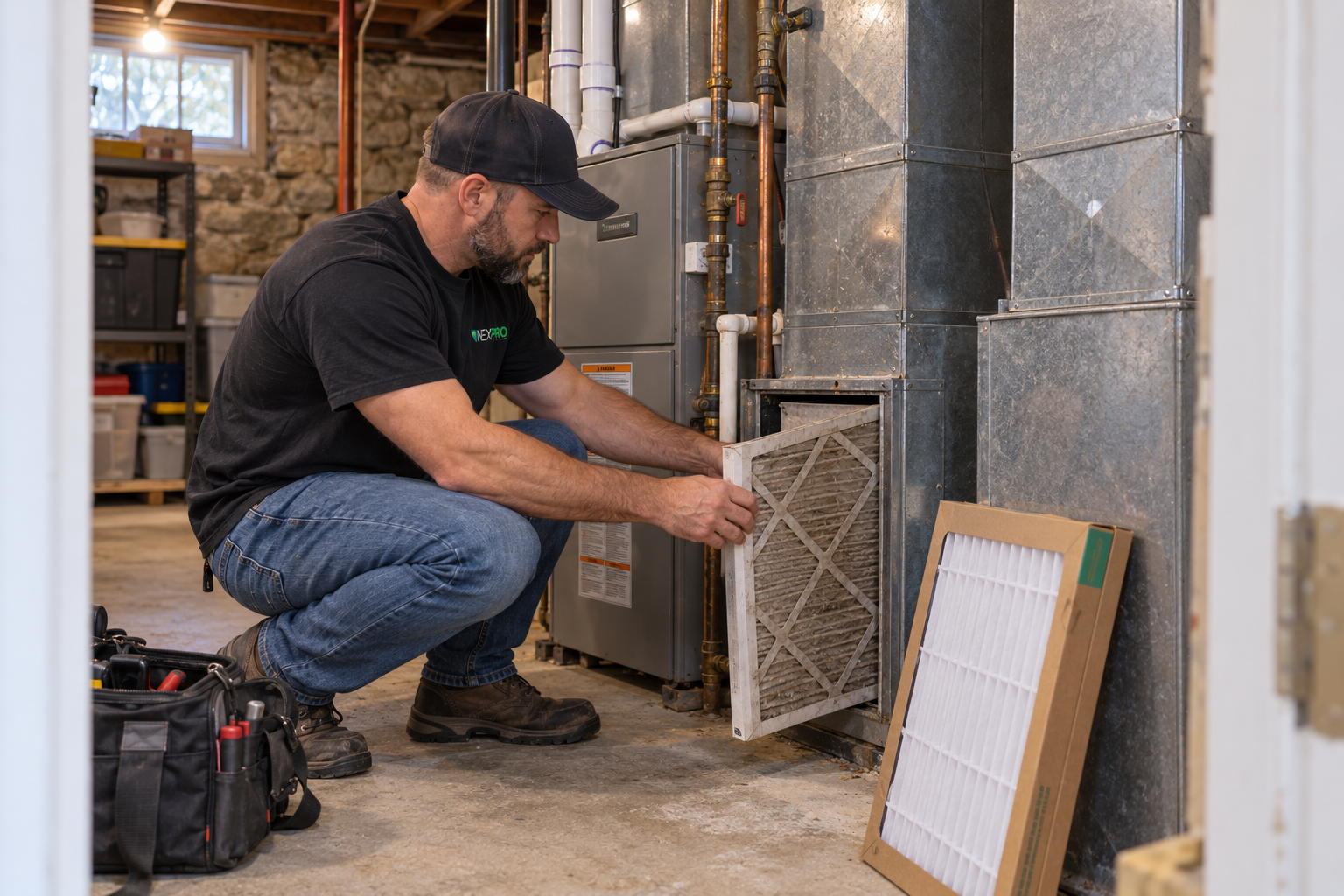
At NexPro HVAC & Plumbing, we help homeowners in Newton, Massachusetts, and nearby communities understand what is wrong with their heating equipment before making a major replacement decision.
Does a Furnace Problem Mean You Need a New Furnace?
When your home is cold and the furnace is not responding, a replacement recommendation can feel urgent. But a heating interruption describes a symptom, not a diagnosis.
A gas furnace depends on several systems working together, including the thermostat, ignition system, blower, safety controls, and airflow pathways. A problem in one area can interrupt heating even when much of the equipment remains serviceable.
Restricted airflow, ignition faults, thermostat issues, and failing components are among the possible causes of gas furnace problems. A professional inspection helps determine which issue applies to your system.
Before deciding to replace your furnace, ask:
- What specifically failed?
- What testing supports that diagnosis?
- Can the problem be repaired safely?
- What condition is the rest of the furnace in?
- How does the repair cost compare with the complete replacement proposal?
A useful recommendation should answer these questions clearly.
Common Gas Furnace Problems That May Be Repairable
Different problems can produce similar symptoms. These examples explain why diagnosis matters before a whole-system replacement.
The Furnace Is Blowing Cold Air
Cold air from the vents does not automatically mean the furnace has reached the end of its life. Possible causes include thermostat fan settings, restricted airflow, ignition problems, or a safety control interrupting burner operation. The blower may continue running even when the furnace is not producing heat. The goal is to determine why heating has stopped rather than assuming the entire system has failed.
The Furnace Starts but Shuts Off Quickly
A furnace that starts and then stops needs its operating sequence evaluated. Depending on the equipment, the technician may investigate flame detection, ignition, airflow, and safety controls. Replacing a suspected part without understanding the shutdown can leave the original problem unresolved.
The Furnace Keeps Turning On and Off
Frequent short operating cycles are commonly called short cycling. Potential causes include airflow restrictions, thermostat issues, equipment sizing, or another mechanical or control problem. Because the causes differ, the repair recommendation should follow testing rather than the symptom alone.
The Furnace Will Not Ignite
An ignition problem may involve a serviceable component rather than the entire furnace. However, a no-ignition condition can have several causes, and the equipment must be evaluated before deciding what to repair. A failed ignitor and a complete furnace failure are different findings. Understanding that distinction can help you evaluate a proposal.
The Furnace Has Weak or Uneven Airflow
If some rooms feel colder than others, the furnace itself may be only part of the issue. The inspection may need to consider filters, blower performance, vents, and the air distribution system. Replacing the heating equipment without addressing the actual airflow problem may leave comfort concerns unresolved.
Replacing a Furnace Component Is Different From Replacing the Furnace
Homeowners sometimes hear the word "replacement" and assume it means buying an entirely new heating system. In furnace service, replacement can also mean installing a new component within the existing equipment.
For example, a repair may involve a compatible:
- Ignitor
- Flame sensor
- Blower motor
- Inducer motor
- Control board
- Thermostat or control component
Whether a particular repair makes sense depends on the diagnosis, parts availability, equipment condition, and total cost. The question is not simply whether a part can be replaced. It is whether that repair offers reasonable value and restores safe, dependable operation.
What Should Be Checked Before Recommending Furnace Replacement?
At NexPro, we prioritize understanding the problem before discussing a major equipment purchase. The diagnostic scope depends on the furnace model and symptoms. Relevant areas may include:
| Area evaluated | Why it matters |
|---|---|
| Reported symptoms and repair history | Helps identify recurring problems and previous work. |
| Thermostat and controls | Establishes whether the system receives the correct heating command. |
| Startup and operating sequence | Helps locate where normal operation is interrupted. |
| Filters and airflow | Identifies restrictions that may affect heating performance. |
| Ignition and flame detection | Helps evaluate why the burners do not start or remain operating. |
| Blower operation | Assesses how heated air moves through the system. |
| Safety controls and venting | Helps determine whether safe operation can be restored. |
| Equipment condition and parts availability | Supports a practical repair or replacement recommendation. |
Ask for an explanation of the findings, the proposed work, and the expected cost before authorizing a repair.
Unsure whether your furnace needs repair or replacement? Schedule a diagnostic visit with NexPro to understand the problem and discuss your options.
When Does Gas Furnace Repair Make Sense?
Repair may be a reasonable choice when:
- The fault is isolated to a serviceable component.
- Suitable replacement parts are available.
- The remaining equipment is in serviceable condition.
- Safe operation can be restored.
- The cost is reasonable relative to the system's condition.
- The furnace does not have a pattern of recurring major failures.
For example, a documented component failure in otherwise serviceable equipment deserves a different discussion from multiple deteriorating assemblies. An older furnace should be evaluated on its actual condition. Age is useful context, but it should not replace inspection and testing.
When Might Furnace Replacement Be the Better Option?
A repair-first approach still requires recognizing when continued repairs offer poor value or cannot restore safe operation. Replacement may deserve serious consideration when:
- A significant safety defect is identified.
- Essential compatible parts are unavailable.
- Several major components are deteriorating.
- Expensive repairs keep recurring.
- The equipment cannot adequately serve the home.
- The repair proposal offers limited value compared with replacement.
Safety note: A suspected damaged heat exchanger requires professional assessment. The furnace should not continue operating until the concern has been evaluated and safe use has been established.
A responsible recommendation should explain the specific finding and why replacement is appropriate.
If your furnace has stopped heating and you are unsure where to start, read our guide on gas furnace not heating in Newton, MA for possible causes and what a diagnostic visit covers.
How Much Does Gas Furnace Repair Cost?
There is no single price that applies to every furnace problem. The cost can depend on:
- The failed component
- The furnace make and model
- Parts availability
- Equipment access
- Diagnostic and repair labor
- Additional problems found during testing
- Applicable warranty coverage
NexPro uses a diagnostic fee to evaluate the equipment and identify the cause. Before approved repair work begins, you should understand the findings, available options, and proposed cost. When comparing repair and replacement, compare complete scopes. Avoid making the decision from a generic online price or an arbitrary percentage rule alone.
Should You Get a Second Opinion Before Replacing Your Furnace?
A second opinion can be useful when you receive a major replacement recommendation without a clear explanation. Consider requesting another evaluation if:
- The failed component was not identified.
- You were not shown or told what testing was performed.
- Equipment age was the main reason given for replacement.
- Repair options were not discussed.
- The system has already received unsuccessful repairs.
A second opinion should involve an independent assessment of the furnace. It may confirm the original recommendation or identify a practical repair option. For a detailed guide on when a second opinion makes sense, read our article on furnace replacement second opinions.
Can Maintenance Help Reduce Furnace Problems?
Routine maintenance gives a technician an opportunity to inspect operation and identify developing concerns. Follow the manufacturer's filter guidance and arrange appropriate professional service for your equipment. Maintenance can support performance and reliability, but it cannot guarantee that every breakdown will be prevented.
For Massachusetts homeowners, arranging service before the furnace becomes essential for daily comfort also provides more time to discuss any findings. If your furnace is already shutting down, failing to ignite, or producing inadequate heat, request a diagnostic visit and describe those symptoms when booking.
Gas Furnace Repair and Diagnostics in Newton, MA
NexPro HVAC & Plumbing is based in Newton and serves nearby communities including Wellesley, Needham, Weston, Brookline, Waltham, and Watertown. We focus on diagnosing existing equipment, explaining the findings, and discussing practical repairs before recommending major replacement.
When requesting furnace service, provide:
- Your city and property location.
- The furnace make and model, if available.
- What the furnace does when heating is requested.
- Any displayed error code.
- Recent repairs or maintenance.
- Any replacement recommendation you have already received.
This information helps our team understand your concern and prepare for the visit.
Before Replacing Your Furnace, Understand the Problem
A furnace that will not heat deserves a clear diagnosis. Sometimes the appropriate solution is maintenance or a targeted component repair. In other cases, equipment condition, safety, or repeated major failures justify replacement. NexPro helps you understand the difference so you can make an informed decision about your home's heating system.
Frequently Asked Questions
Can a gas furnace be repaired instead of replaced?
Yes, some gas furnace problems can be resolved through maintenance or component repair. The right option depends on the identified fault, equipment condition, parts availability, and whether safe operation can be restored.
Does an older furnace automatically need replacement?
No. Age should be considered alongside condition, repair history, performance, and the proposed repair cost. An inspection provides more useful information than age alone.
Does replacing a blower motor mean replacing the entire furnace?
No. A blower motor can be replaced as a component repair when a suitable part is available and the repair makes sense for the equipment.
Why does my furnace run without heating the house?
Possible explanations include control settings, ignition problems, airflow restrictions, or a safety shutdown. The operating sequence needs to be evaluated to identify the cause.
Is furnace repair always cheaper than replacement?
A component repair may have a lower upfront cost, but the better long-term decision depends on the complete condition of the equipment and the likelihood of further major repairs.
Can NexPro provide a second opinion on furnace replacement?
You can request a diagnostic evaluation and share the existing recommendation. NexPro assesses the equipment and explains whether repair or replacement is appropriate based on the findings.
What should I do if I smell gas or a carbon monoxide alarm sounds?
Leave the building immediately. If you suspect a gas leak, avoid operating switches or creating ignition sources. From a safe location, contact emergency services or your gas utility. Do not resume furnace operation until the property and equipment have been cleared for safe use.
Does NexPro offer furnace service in Newton and nearby towns?
NexPro serves Newton, Wellesley, Needham, Weston, Brookline, Waltham, Watertown, and nearby communities. Contact the service desk to confirm availability for your address.
Request a Furnace Diagnostic Visit in Newton, MA
Get a clearer understanding of your equipment and the options available. Whether you need help with a current problem or want to discuss preventive maintenance, NexPro HVAC & Plumbing is ready to review your service request.