
Furnace Short Cycling: Can It Be Fixed Without Replacing the System?
Furnace short cycling can sometimes be corrected without replacing the entire heating system.
Repeated starts and stops may result from restricted airflow, thermostat problems, or a mechanical or control fault. At NexPro HVAC & Plumbing, our approach is straightforward: repair first, replace only when it makes sense.
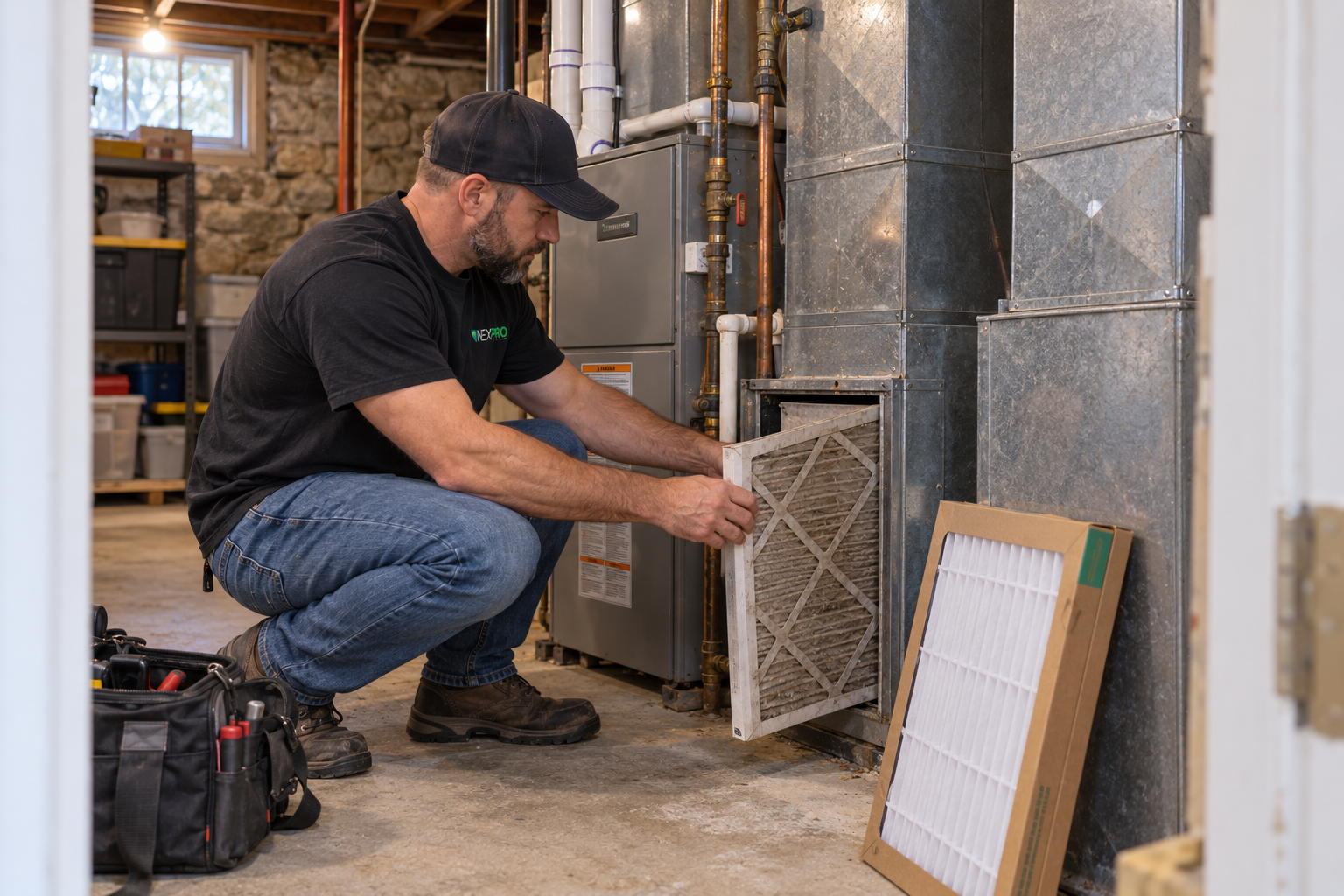
Furnace short cycling can sometimes be corrected without replacing the entire heating system. Repeated starts and stops may result from restricted airflow, thermostat problems, or a mechanical or control fault. The appropriate solution depends on identifying why the heating cycle is ending early and whether safe, dependable operation can be restored.
At NexPro HVAC & Plumbing, we help homeowners in Newton, Massachusetts, and nearby communities investigate heating problems before making a major equipment decision. Our approach is straightforward: repair first, replace only when it makes sense.
What Is Furnace Short Cycling?
Furnace short cycling describes repeated heating cycles that end unusually quickly, often before the home reaches the thermostat setting.
You may notice the furnace starting, briefly delivering warm air, stopping, and starting again. The house may remain uncomfortable despite frequent equipment operation.
However, not every short cycle indicates a fault. Heating cycles vary with outdoor conditions, thermostat settings, equipment design, and the home's heating needs. The concern is a persistent or newly developed pattern of interrupted heating, especially when accompanied by inadequate comfort, unusual sounds, or fault codes.
Short Cycling vs. a Furnace That Fails During Startup
These symptoms are related, but they do not always describe the same problem.
A furnace that begins its startup sequence and shuts down before producing sustained heat may have a startup or ignition fault. A furnace that establishes heating but repeatedly stops before satisfying the thermostat may require investigation of airflow, temperatures, controls, or other operating conditions.
When requesting service, describe what happens:
"The furnace produces warm air for a few minutes, stops while the house is still cold, and then starts again."
That information is more useful than assuming which component needs replacement.
Why Does a Furnace Keep Turning On and Off?
Several conditions can contribute to abnormal cycling. A technician should determine which applies to your equipment.
Restricted Airflow
A heavily restricted filter, obstructed return grille, or another airflow problem can interfere with heat moving through the furnace. If the equipment overheats, a protective control may interrupt burner operation. The system can then appear to cycle repeatedly as the condition returns. Checking the accessible filter and keeping grilles unobstructed are useful first steps. Persistent shutdowns need further investigation.
Thermostat Settings or Location
The thermostat helps determine when heating starts and stops. Settings, control problems, or exposure to a nearby heat source can affect how it reads conditions and requests heating. A thermostat issue should be evaluated before assuming the furnace itself needs replacement.
Blower or Air Distribution Problems
The inspection may need to consider whether the blower and distribution system are moving air appropriately. Weak airflow or uneven room temperatures can provide useful clues, but they do not identify the failed part by themselves. Filters, vents, duct conditions, and blower performance may all deserve attention.
Ignition or Flame Detection Interruptions
Repeated heating attempts can sometimes be confused with established heating cycles ending early. If burner operation starts and quickly stops, ignition and flame detection may need evaluation. The technician should observe the sequence and investigate the cause rather than replace a component based only on the timing.
Equipment Sizing or Other Operating Problems
Short cycling can also involve equipment sizing or another mechanical or control issue. This is one reason a replacement decision should follow diagnosis. A problem affecting the system's operation may not be solved by replacing a suspected part, and a new furnace should not be proposed without understanding the existing conditions.
Is Furnace Short Cycling a Reason to Replace the Furnace?
Short cycling is a symptom, not a replacement diagnosis. The right next step depends on:
- What interrupts the heating cycle.
- Whether the problem is isolated or recurring.
- The condition of the equipment.
- The availability of suitable repair parts.
- Whether safe operation can be restored.
- The value of the proposed repair.
Some problems may be resolved through maintenance, correcting airflow or control conditions, or repairing a serviceable component. Other findings may justify replacement. The recommendation should explain the evidence behind that conclusion.
What Can You Check Before Scheduling Service?
If there are no signs of a gas leak, carbon monoxide concern, or another immediate hazard, begin with basic observations.
Review the Thermostat
Confirm that the thermostat is set to Heat and that its schedule matches your intended settings. Note whether the furnace stops because the displayed temperature has reached the setpoint or whether heating ends while the home remains below it.
Check the Accessible Filter
Follow the equipment manufacturer's instructions for inspecting or replacing the filter. If you are unsure about the correct filter, ask during the service visit. Do not run the furnace without its required filter as a way to test the problem.
Look for Obstructed Grilles
Check whether furniture, rugs, or stored items cover supply or return openings. Clearing an obvious obstruction may help airflow, but recurring shutdowns still require evaluation.
Record the Cycling Pattern
Write down:
- Approximately how long heating lasts.
- How long the furnace remains off.
- Whether warm air reaches the vents.
- Whether the room temperature improves.
- Any visible fault code.
- Recent changes, repairs, or thermostat adjustments.
Avoid opening internal equipment compartments or attempting gas, electrical, or combustion repairs.
If you smell gas or a carbon monoxide alarm sounds, leave the building immediately. Contact emergency services or your gas utility from a safe location. Avoid operating switches or creating ignition sources when a gas leak is suspected.
Why Repeated Resets Are Not a Solution
Restarting a furnace does not establish why it stopped. If a protective control is interrupting operation, repeatedly resetting the equipment may temporarily change the symptom while leaving the cause unresolved.
Do not bypass safety controls or force the furnace to continue heating. If abnormal cycling persists after basic settings and filter checks, arrange a diagnostic visit.
Ready to find out why your furnace keeps cycling? Schedule furnace diagnostics with NexPro and tell us how your heating cycles have changed.
What Does NexPro Investigate During a Diagnostic Visit?
The scope depends on your furnace model and reported symptoms. Relevant areas may include:
| Area evaluated | What it helps establish |
|---|---|
| Thermostat settings and heating command | Whether heating is being requested consistently. |
| Cycle timing and operating sequence | When and how heating is interrupted. |
| Available fault information | What evidence can guide further testing. |
| Filter and airflow conditions | Whether restrictions affect operation. |
| Blower performance | Whether air moves through the equipment appropriately. |
| Ignition and flame detection | Whether burner operation starts and remains established. |
| Relevant safety controls | Whether a protective shutdown occurs and why. |
| Overall equipment condition | Whether the proposed repair offers practical value. |
A useful explanation connects the findings to the repeated starts and stops. Before approving work, ask what caused the interruption, how it was confirmed, and what the proposed repair addresses.
When Does Short Cycling Repair Make Sense?
A repair may be appropriate when the cause is identifiable and the equipment remains serviceable. For example, correcting a verified control problem or addressing an airflow restriction deserves a different discussion from equipment with multiple deteriorating assemblies.
A practical recommendation considers:
- The immediate fault.
- Related operating conditions.
- Previous repair history.
- Compatible parts availability.
- Repair cost.
- Whether normal operation can be verified afterward.
At NexPro, we prioritize understanding these conditions before recommending major replacement.
When Might Replacement Be the Better Option?
Replacement may deserve consideration when:
- Safe operation cannot be restored through a practical repair.
- Essential compatible parts are unavailable.
- Several major components are deteriorating.
- Significant failures keep recurring.
- The proposed repair offers limited value.
- An equipment sizing issue requires a broader system assessment.
If replacement is recommended, ask why it addresses the diagnosed problem and whether other conditions also need correction. If you have already received a replacement proposal, you can request a second opinion and share the original findings. For guidance on when a second opinion makes sense, read our article on furnace replacement second opinions.
How Much Does Furnace Short Cycling Repair Cost?
There is no single repair price for short cycling because several different problems can produce it. The final cost may depend on the furnace model, diagnosed fault, parts, access, labor, and additional concerns identified during testing.
NexPro uses a diagnostic fee to investigate equipment problems. Confirm what the visit covers and review the proposed repair scope and cost before authorizing work. A quote based on the actual cause is more useful than a generic price for a furnace that keeps turning on and off.
Furnace Short Cycling Diagnostics in Newton, MA
NexPro HVAC & Plumbing is based in Newton and serves nearby communities including Wellesley, Needham, Weston, Brookline, Waltham, and Watertown.
When requesting service, provide your location, equipment information, approximate cycle timing, and any recent repair history. Let us know if:
- The problem began after other work.
- Another company recommended replacement.
- The furnace has been shut down for a safety concern.
- Your home has multiple heating systems.
These details help our team understand the concern and prepare for the visit. For a broader look at the factors behind a repair-or-replace recommendation, read our guide on gas furnace repair vs. replacement and our article on gas furnace not heating in Newton, MA.
Find the Cause Before Replacing the System
A furnace that repeatedly turns on and off needs an explanation. The solution may involve maintenance, an operating adjustment, or a targeted repair. Other findings may support replacement. NexPro helps you understand what is happening and review practical options for the equipment you already own.
Frequently Asked Questions
What is furnace short cycling?
Short cycling describes repeated heating cycles that end unusually quickly, often before the thermostat setting is reached. The actual pattern needs to be evaluated in the context of the equipment and home.
How many minutes should a furnace run?
There is no universal cycle length for every system. Outdoor conditions, equipment design, thermostat controls, and heating demand affect run time. A new pattern of interrupted heating deserves attention.
Can furnace short cycling be fixed without replacement?
Yes, some causes can be corrected through maintenance, control repairs, or addressing airflow problems. Diagnosis is needed to determine whether repair is appropriate.
Can a dirty filter cause short cycling?
A severely restricted filter can affect airflow and contribute to overheating or a protective shutdown. Follow the manufacturer's filter guidance and arrange service if the problem persists.
Can the thermostat cause a furnace to cycle frequently?
Thermostat settings, location, or control problems can affect cycling. The heating command and equipment response should be evaluated before replacing either component.
Should I keep resetting a short-cycling furnace?
Avoid repeated resets when shutdowns keep returning. The cause needs investigation, and safety devices should never be bypassed.
Does short cycling mean my furnace is too large?
Equipment sizing is one possible factor, but short cycling alone does not prove the furnace is oversized. Other causes should also be investigated.
Does NexPro diagnose furnace short cycling in Newton, MA?
NexPro provides heating diagnostic and repair services in Newton and nearby communities. Contact the team to confirm availability, scheduling, and diagnostic details.
Schedule a Furnace Diagnostic Visit in Newton, MA
Get a clearer understanding of your equipment and the options available. Whether you need help with a current problem or want to discuss preventive maintenance, NexPro HVAC & Plumbing is ready to review your service request.